Most companies aren't undone by bad ideas. They're undone by the good ones. Success has a habit of sanding off the edges that made them unique.
Founders have vision.
Investors demand returns.
Somewhere in the middle sits a lawyer whose job description expands from legal adviser to translator between two entirely different ways of seeing the world. Less guardian of the rulebook than custodian of productive tension.
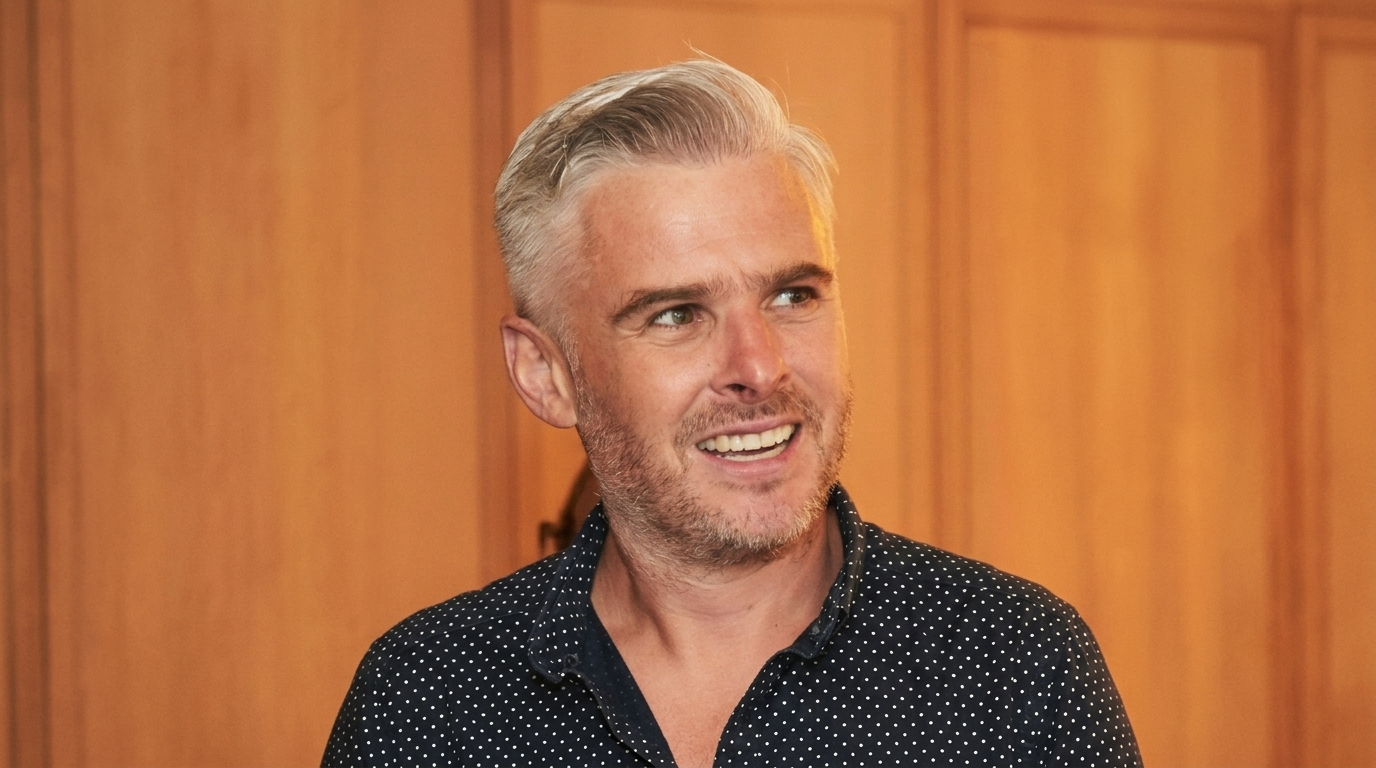
Nick is the one walking that wire.
Most imagine in-house counsel spend their days reviewing contracts and pulling out their best headmaster routine for enthusiastic colleagues.
Sometimes that's true.
Sometimes you're helping build a business that's simultaneously a property developer, construction company, hospitality operator, investor, employer and wellbeing brand. Each part comes with its own business and legal questions.
The more interesting challenge, though, isn't technical. It's cultural.
Nick describes an organisation built around an unusually ambitious idea: reviving the ancient ritual of communal bathing to improve life in modern cities. That vision naturally attracts architects, artists, engineers and people on the fringe motivated by something more idealistic than quarterly earnings.
Of course, buildings still need financing.
So that same organisation also needs to satisfy investors who are able to reduce almost any conversation to one rather important question: will it generate a return?
Neither side is wrong. They simply speak different languages.
The trick isn't choosing between the two.
It's refusing to let either dominate.
Lean too far towards corporate process and the entrepreneurial spark begins to disappear. Lean too far towards idealism and convincing investors becomes tricky.
This tension isn't a problem to solve.
It's the foundation for creating something special.
Businesses often equate size with danger.
It's an understandable mistake. Bigger companies have more people, more exposure and more opportunity to make spectacularly expensive mistakes.
Nick argues something rather different.
Complexity creates risk. Size merely amplifies it.
That's an observation that stretches well beyond legal departments.
Plenty of relatively small organisations become almost impossible to manage because they accumulate contradictory objectives and competing cultures. Others become enormous while remaining surprisingly coherent because everyone understands what they're trying to achieve.
One moment you're discussing long-term strategic investment structures. The next you're dealing with operational issues that refuse to respect carefully laid plans. Real legal work isn't neatly divided into strategic or tactical. It oscillates between the two.
Around the time Chernobyl came out, Nick had a favourite line for his team at Dyson: "We're selling vacuum cleaners, not running nuclear reactors."
It was his way of reminding them that panic rarely improves judgement.
A good GC wears the responsibility lightly.
Growth has a habit of professionalising everything.
Processes appear. Structure forms. Data collates.
All entirely sensible.
Organisations delivering wellbeing experiences aren't defined by buildings. They're defined by how they make people feel.
Their greatest asset can't be easily measured. Call it vibe. Call it energy. The label matters less than the recognition that organisations possess an identity which often becomes their greatest competitive advantage.
The question is how that identity survives success.
Nick speaks about feeling responsible not just for legal risk but for protecting the spirit of the organisation itself. That's a striking way for a GC to describe the role but perhaps that's testament to how critical that identity is.
Shortly after joining, the COO showed Nick where the magic actually happens.
Not by the poolside. Underneath it.
Beneath each site sits an intricate network of filtration systems, climate control, engineering and technology quietly orchestrating an experience that feels effortless.
Thousands of tiny decisions weaved together so seamlessly that guests never notice them.
Therme's competitive advantage is this knowledge and understanding.
For Nick, that presented an entirely different challenge from his years at Dyson. There, innovation could often be captured in patents and protected through a formidable and registered IP portfolio.
At Therme, the value lies less in an individual technology than in way many technologies, processes and operational decisions combine into something competitors struggle to replicate.
That makes protection considerably harder.
Much of the business's future value depends not on patenting individual ideas but on identifying, preserving and deploying that collective know-how across new facilities around the world.
Ironically, the more process you introduce to protect innovation, the greater the risk of smothering the creativity that produced it in the first place.
Like so much else in Nick's role, it's another balancing act.
Protect enough to preserve your advantage.
Leave enough freedom for the next breakthrough to happen.
The thread running through Nick's career isn't law. It's balance.
Protect the culture without resisting growth. Protect the business without slowing it down. Introduce enough process to scale but never so much to stifle innovation.
The law is the easy part.
Walking the wire is where the fun begins.