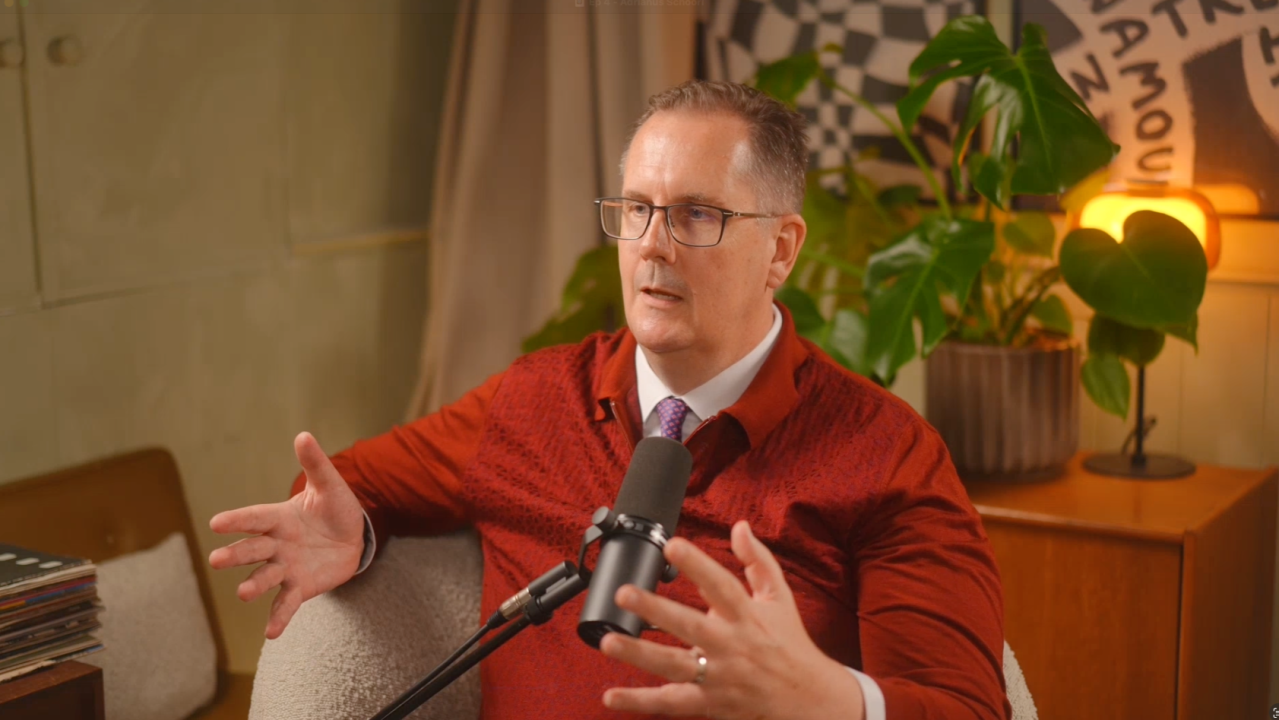
There are two types of lawyers in this world: those who planned it and those who wandered in after a degree in medieval basket-weaving.
Or so we’re led to believe...
In reality there’s something else that seems common to all lawyers: an enthusiasm for cars.
The Dutch magazine Cars and Lawyers—a publication that apparently exists—suggests this phenomenon is less coincidence and more a deeply ingrained professional condition, like a life lived in six-minute increments or mild existential dread.
Building the foundation
Adrianus's story begins in the Netherlands, where becoming a lawyer involves the rather novel idea of actually studying law.
No conversion after a degree in marine biology here.
By his early twenties he was knee-deep in banking and securities law—back when it was still called banking and securities law, rather than “FinTech”, as it's now known.
His early work focused heavily on research, litigation prep and understanding how financial systems actually function in practice. It was less about shortcuts and more about putting in the reps to build a deep technical base.
And that foundation matters.
Because while tools and technology evolve, the core skills remain stubbornly consistent:
Precision Curiosity Emotional intelligence
That meant being in the office and building relationships in-person. Barbaric, really.
Everything else builds on that.
Habibi, come to Dubai
In 2005, Adrianus did something many lawyers only talk about over a second glass of wine—he left the comfort of Europe for Dubai.
The appeal? A “clean slate.” A chance to build something from scratch.
Not tweak it. Not reform it. Build it.
Dubai and the wider Gulf offered something Europe couldn’t: the ability to take what works, discard what doesn’t and do so without being crushed under centuries of precedent and polite resistance.
The result is a financial ecosystem that is, in many respects, startlingly modern.
Take crypto. While much of the world was still arguing about whether it was real, Dubai was quietly regulating it. With the sort of pragmatism that tends to attract businesses rather than the regulatory zeal (often found in Brussels) that drives them away.
The Middle East mirage
Dubai itself has grown into something faintly absurd and entirely compelling—a place where the police drive Lamborghinis (not ideal for a desert pursuit).
Where the world’s largest everything is just down the road, where in the same afternoon you can ski and drink tea in the desert under a sky so clear it looks like a planetarium.
You could be forgiven for not taking it seriously. A sort of Disneyland for adults.
But scratch the surface and the picture changes. Behind the gloss it's a place that fundamentally rewards effort and isn't shy about celebrating in a very visible way.
People work hard. Standards are high.
The opportunities—particularly for younger lawyers willing to get stuck in—are considerable.
A life less ordinary
And so we arrive at the title.
What does it mean? It's indicative of a mindset embedded across all levels of society in Dubai: a willingness to aim slightly higher, to unashamedly celebrate success and to build rather than inherit.
Adrianus's career is not a template. It’s a reminder.
That law is not just about precedent—it can also be about possibility.
So be bold, work hard and take ownership.