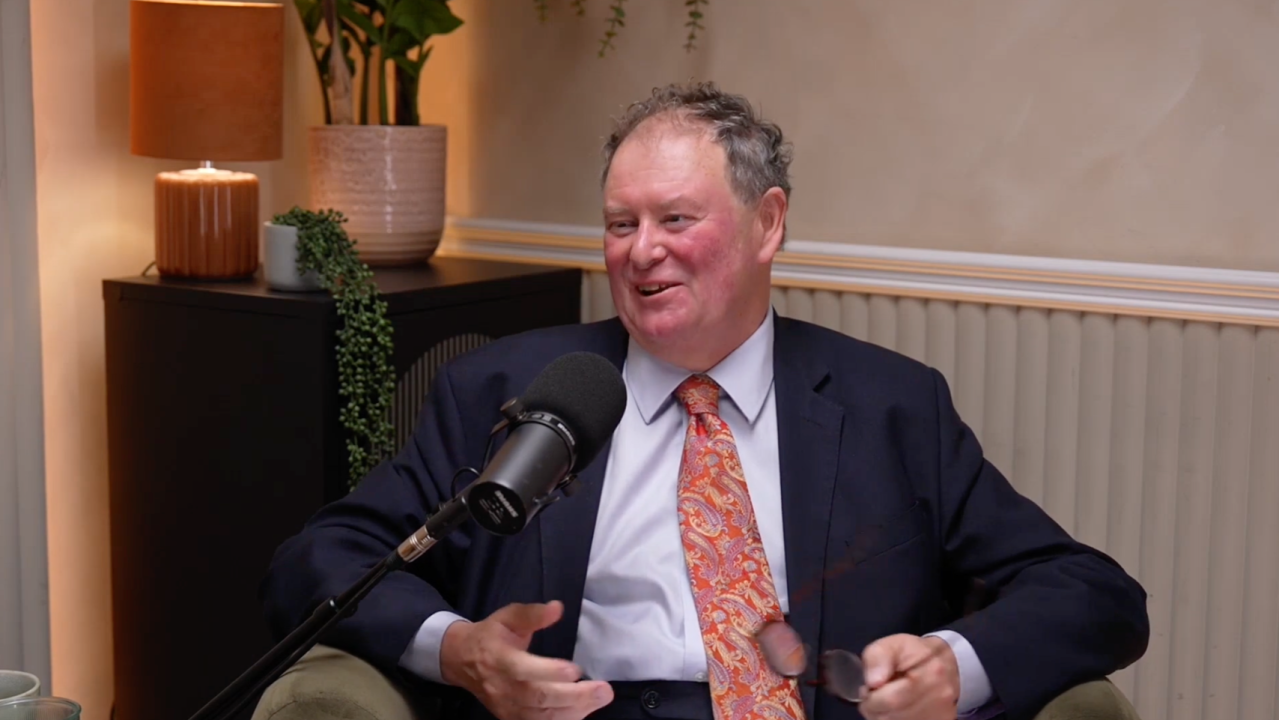
Most lawyers begin their careers wanting to make a difference. Defending the innocent. Holding power to account. Then they discover Cravath newly-qualified salaries. Suddenly they're restructuring Argentine debt (again) with the rectitude of a Renaissance tax collector.
The industry calls this professional maturity.
Mark never made that bargain.
He isn't some wild-eyed activist glued to the M25. Quite the opposite. He’s spent decades operating at the highest levels of litigation and international advisory work.
Mark didn’t fail to optimise for wealth. He consciously chose not to.
That’s why this story feels faintly subversive.
Don't put down the guitar
Mark claims he was “tricked into the law”.
Growing up, Peter Barnes, the original manager of Pink Floyd, happened to be a lodger. One morning over breakfast, Peter asked the teenage Mark what he wanted to do with his life. Like every adolescent in Britain at the time, he announced ambitions to work in the music industry.
Peter suggested he become a lawyer because “they make all the money.”
Several decades later, Mark still delivers the punchline with obvious amusement. Peter, he notes, is now “a multimillionaire, lives in Holland Park and has houses all over the world.” Meanwhile Mark is “relatively impoverished living in the East End of London.”
Heeding his advice, he did become a lawyer and started his own firm at 24.
There’s something wonderfully reckless about being that age. No mortgage, no children and no real appreciation whatsoever of financial risk. Youth isn’t wasted on the young. It’s weaponised by them.
His early work emerged from the art world. Mark’s father was an artist and he’d seen firsthand the peculiar chaos orbiting creative life. One successful exhibition buys eighteen months of security before collapsing back into abject poverty again.
Mark drifted instinctively towards disputes sitting awkwardly between media, politics, human rights and international law. This generalist approach attracted the ire of 'Angry Harry' - an internet troll, who spent years mockingly cataloguing all of Mark's endless specialisms.
For years, Mark used this as his CV.
Saving on school fees
Mark's advocacy education began the traditional way: with humiliation.
He appeared before notoriously hostile Masters while still young enough to believe confidence might compensate for preparation. He was quickly disabused of that notion.
Reflecting on his bruising encounters, Mark noticed something. Most of the Masters had been to public school.
So he adapted.
Donning an old Etonian tie, the “snotty grammar school boy” suddenly enjoyed a much warmer reception. He had stumbled across what mattered to the tribunal. Acquired for the price of a tie.
The detail is funny. The implication less so.
But it taught him something valuable: law isn't merely technical. Litigation is centred around people, often riddled with bias, trying to convince others that they're right.
That understanding served him well in social impact work where the objective wasn’t simply winning a case but nudging the law itself somewhere new.
Decriminalising homosexuality in Botswana. Challenging child marriage in India. Developing arguments that increased compensation for striking miners during the Thatcher era.
These aren’t merely legal victories. They’re examples of law functioning as social architecture rather than administrative plumbing.
And notably, they rarely represent the most lucrative work.
Still standing
The guiding principle behind Mark's career has been the pursuit of that elusive thing called justice.
A principle Britain has revered since King John signed Magna Carta in 1215, codifying a reluctant compromise that has arguably become our greatest gift to the world.
Mark's work increasingly centres on defending the integrity of the rule of law itself. A principle repeatedly challenged, yet somehow enduring long after assailants meet their end.
Agree or disagree. Dismiss or admire. His work matters and we need people like him.
Most lawyers begin their careers wanting to make a difference.
Occasionally, one does.